Tuesday, July 13, 2010

Inception

Inception (2010) is a mind-blowing experience – a delicate and beautiful film that is both complex and touching, and will soon become known as Christopher Nolan’s best film.

Christopher Nolan presents us with his first original screenplay in ten years – overwhelming in its narrative and originality – and is being released at a time when the film industry is desperate for sequels, remakes, and endless reboots of franchises, which makes us ask ourselves – are we ready for a cerebral blockbuster?


Inception is set within the world of our dreams and deals with corporate espionage. Dom Cobb (Leonardo DiCaprio) is a skilled thief in the art of extraction, whose job is to enter people’s dreams and steal valuable secrets. Cobb soon employs Ariadne (Ellen Page), a graduate student studying architecture, to join his team of experts. This team also consists of Arthur (Joseph Gordon-Levitt), who researches their potential targets, and Eames (Tom Hardy), whose responsibility is impersonating and forging targets within the dream world.

In the film, Cobb is offered a chance at redemption, which will allow him to earn his life back and give him the chance to return home to reunite with his family. In return, Cobb is asked to deliver the perfect crime – instead of stealing, his team must do the opposite – they must plant an idea within the mind of their victim, which is known as “inception.”

Inception begins by making us scratch our heads, and requires several minutes for us to wrap our minds around the subject matter. Like The Matrix (1999), such a film requires some information about this newfound world before we can explore its possibilities. Cobb begins by discussing the basics to Ariadne, such as the notion of “kicks” – a technique used to wake up a subject from the dream world. Cobb also briefs us on the construction of a dream, and teaches us the rules and ins and outs of this world. Peter Travers of Rolling Stone so wonderfully said, “We’re so used to being treated like idiots.” Christopher Nolan takes his audience seriously and demands their attention, and a major blockbuster is no exception. In Inception, Nolan expects his audience to keep asking questions, instead of providing them with all the answers.


Inception consists of an effective balance between science fiction thriller and a romance drama. Leonardo DiCaprio carries us through the complexities of the film, and becomes the center for the emotional resonance of the story. It’s a film full of action, thrills, and mystery, but is successfully grounded in realism through the heart of the story – and it’s because of this balance that makes this Christopher Nolan’s best film. Hans Zimmer also once again delivers with music that is as haunting as all his previous scores, as he adds his own dimension to the darkness of Inception.

It’s Christopher Nolan’s imagination that is most impressive, as he creates dreams within dreams, and worlds within worlds. In fact, he only relies on CGI when absolutely necessary – so, if it feels real, that’s because it is real. Nolan demands a sense of reality, and when dealing with such a massive film, it’s key to keep your audience within the world you have created. Who else would go to such great lengths?

Leonardo DiCaprio is certainly worthy of any and all praise he receives for this role. Cobb is definitely the emotional driving force of the film, and allows us to invest our emotions into his character. Cobb’s objective is clear from the very beginning, and we are able to sympathize with him.


Inception's final moments are what solidify this as Christopher Nolan's best film, as well emphasizing his growth as a filmmaker. Inception moves a step further from his other films, as Nolan explores the emotional lives of his characters and what fuels their suffering. It’s the spinning top, however, that serves as the recurring visual motif in the film. Its purpose is simple – it’s Cobb’s totem, and his means of testing reality. If the spinning is continuous, the dream is still in effect, but if it stops, he is no longer dreaming.

If nothing else, Christopher Nolan provides us with a glimmer of hope in this ever-changing film industry.

Inception is scheduled for release on July 16, 2010.

Thursday, June 24, 2010

It's Not What You Say, It's How You Say It!

If there's something we can all agree on, it's that sometimes a certain line from a film can be just as memorable as the film itself. For years, film lovers have been quoting their favorite lines from their favorite films. There's been a handful of famous quotes over the past few decades, including some from Gone with the Wind (1939), The Wizard of Oz (1939), and The Godfather (1972). It's never-ending and the list goes on, so here's a collection of some of my favorites.

I hope I have included several favorites of your own, and if not, I hope that some of them inspire you enough to want to watch the films. In fact, that's the magic of cinema – when a specific scene or sentence from a film can inspire! As always, feel free to share favorites of your own in the "Comments" section.

"Here's looking at you, kid." – Humphrey Bogart as Rick Blaine in Casablanca (1942)

"Well, I guess some like it hot." – Tony Curtis as Junior in Some Like It Hot (1959)

"As far back as I can remember, I always wanted to be a gangster." – Ray Liotta as Henry Hill in Goodfellas (1990)

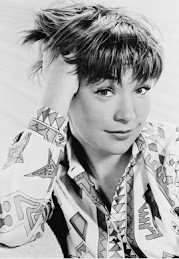
"Shut up and deal!" – Shirley MacLaine as Fran Kubelik in The Apartment (1960)

"I did not have to go as far as I was prepared to go, but I was prepared to go all the way." – Ian Holm as Mitchell Stephens in The Sweet Hereafter (1997)

"A strange man... defecated on my sister." – Woody Allen as Clifford Stern in Crimes and Misdemeanors (1989)

"It's a reason to get up in the morning. It's a reason to lose weight, to fit in the red dress. It's a reason to smile. It makes tomorrow all right. What have I got, Harry? Hm? Why should I even make the bed or wash the dishes? I do them, but why should I? I'm alone." – Ellen Burstyn as Sara Goldfarb in Requiem for a Dream (2000)

"Shut up and deal!" – Shirley MacLaine in The Apartment (1960)


"I have a competition in me. I want no one else to succeed. I hate most people." – Daniel Day-Lewis as Daniel Plainview in There Will Be Blood (2007)

"You know what I expected? Applause. I was surprised by what happened. They didn't applaud." – Casey Affleck as Robert Ford in The Assassination of Jesse James by the Coward Robert Ford (2007)

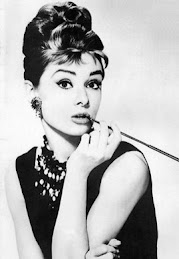
"If I could find a real-life place that'd make me feel like Tiffany's, then–then, I'd buy some furniture and give the cat a name!" – Audrey Hepburn as Holly Golightly in Breakfast at Tiffany's (1961)

"Our teacher says that God loves the blind more because they can't see... but I told him if it was so, He would not make us blind so that we can't see Him. He answered, "God is not visible. He is everywhere. You can feel Him. You see Him through your fingertips." Now, I reach out everywhere for God until the day my hands touch HIm and tell Him everything, even all the secrets in my heart." – Mohsen Ramezani as Mohammad in The Color of Paradise (1999)

"If you win, you win. If you lose, you still win." – Joe Pesci as Joey LaMotta in Raging Bull (1980)

"I thought of that old joke, you know, the... this–this guy goes to a psychiatrist and says, "Doc, uh, my brother's crazy... he thinks he's a chicken." And, uh, the doctor says, "Well, why don't you turn him in?" The guy says, "I would, but I need the eggs." Well, I guess that's pretty much now how I feel about relationships, you know. They're totally irrational and crazy and absurd, and... but, uh, I guess we keep going through it because, uh, most of us... need the eggs." – Woody Allen as Alvy Singer in Annie Hall (1977)

"I'm pregnant." – Dianne Wiest as Holly in Hannah and Her Sisters (1986)

"I could have gotten one more person, and I didn't... and I–I didn't." – Liam Neeson as Oskar Schindler in Schindler's List (1993)

Thursday, March 18, 2010

Chloe, it's still an Atom Egoyan film

Atom Egoyan is known for his non-linear narratives and an unconventional method of telling a story. In each of his films, he presents a series of characters that, at first, seem unrelated but as the story progresses, we are given some information regarding their lives, as we begin to piece together the overall story. This results in parallel stories between characters, as we begin to discover that they are all related in some way. Egoyan, in a sense, tells his story backwards. He wants his audience to interpret the ending, piece together the lives of the characters, and ask questions about the film. His latest film, Chloe, stars an ensemble cast of talented actors, including Liam Neeson, Julianne Moore and Amanda Seyfried.

Chloe revolves around a wife who suspects her husband is cheating. When she hires an escort to test his limits, things begin to get out of hand as the story delves into the personal lives and passions of the characters. There's something different about this film, though. Chloe tells a straightforward story and is very much linear, with no congruences between space and time. That's because it is the first screenplay Atom Egoyan has directed that he has not himself written. His films have always been considered a work of art by many, simply because of the writing. Exotica is a beautiful story between a series of characters and is set partly in a strip club. The Sweet Hereafter is Egoyan's adaptation of Russell Banks' novel of the same title, but features Egoyan's touch in its narrative. Chloe comes from a new world, it is written by Erin Cressida Wilson, and it allows for Egoyan to supply us with his vision through his visuals and images.

Film Independent presented an advance screening of Chloe at The Landmark in Los Angeles. Atom Egoyan and Erin Cressida Wilson joined us for a Q&A following the screening. It's tough to talk about the film because what I want to say and what everybody expects me to say will result in two completely different discussions. I'm sure anybody who is interested in this film would like to know the film was, its group of actors, and how this story played out in the hands of Atom Egoyan, as a director and not a writer. I would much rather go into depth about what made this an Atom Egoyan film, and whether or not it is still the work of an auteur, rather than a director for hire. I'm going to steer away from speaking on its genre or how the film compares to other films of its kind, because truth be told, I haven't seen many of them. Chloe exists within these genre films (we will hear a lot about Fatal Attraction and such), but Egoyan explores the complexities and layers of a marriage.

I fell in love with Egoyan's work because of his writing and formal strategies when it came into exploring the narrative of a film. I didn't know quite how to feel about Chloe, because it is an unwelcoming change, especially if the screenplay isn't well written, to begin with. Chloe, however, is exceptionally directed and I believe that's what makes the film work. Its actors fit perfectly together as part of an ensemble and the most important thing is that Egoyan doesn't treat them as stars. He doesn't make you feel like Liam Neeson is Liam Neeson or that Julianne Moore is Julianne Moore. Egoyan doesn't even photograph Julianne Moore as we think of her, and instead photographs her within any filters. In the film, we don't feel her sense of glamour or beauty. We see her as her character is represented, a woman going through difficulties, torn between the possibility of a failed marriage. In this film, they are all performers, with great performances being handled by a great director.

I went into the film with the intentions of discovering what was Egoyan about it, considering the screenplay wasn't written by him. Is it the opening sequence? No, Egoyan usually gives us a long tracking shot and allows his credits to spill over. Is it the unconventional narrative? No, Chloe is a linear story, in a rather conventional structure. Somehow, however, Egoyan finds a way to make us aware of his directing hand. Their are recurring visual motifs, such as hands, a comb, mirrors and glass, that all highlight certain characteristics about the characters. Egoyan introduces Chloe through a monologue, then emphasizes her entrance into Catherine's life. He does this all through visuals, and expresses their characteristics and behaviors through imagery. Catherine spends much of her life looking into the lives of other people and understanding them, and at times, controlling them. Egoyan makes us aware of her personality through the use of production design, visuals and cinematography.

In the third act of the film, there is a shift in the tone as we move into a thriller. If I reveal anything here, it will be nothing but spoilers, so I can speak on how it is handled rather than what happens. Egoyan doesn't rely on gimmicks and instead brings his own style into the film. He relies on technology throughout the entire film and allows it to develop the plot; live discussions on webcams and text messaging. He allows us to break apart the characters and put them back together during the ending of the film, when a significant twist is revealed. He does this, once again, through visual motifs. I would have to kill the film to explain the ending of the film. I would like to say, however, that the ending consists of one of the most beautiful shots Egoyan has pulled off. It's breathtaking and is a true testament to Paul Sarossy, the cinematographer of the film.

Chloe allows you to feel the directing hand at work, and we can feel Egoyan constructing the film and telling a story visually. Mychael Danna, who has been Egoyan's composer throughout all of his films, gives us a beautiful, surreal score that highlights the scenes. In a sense, the music is haunting as it comes back to revisit us throughout the film. It seems Egoyan makes everything work here, from the cinematography and music to the production design and art direction. Chloe's costumes emphasize her personality, Catherine's controlling behavior is suggested through the production design of the house she lives in, and David is often revealed through different formats of technology.

During the Q&A, Egoyan and Wilson discussed adapting the film and their approach to the material. Wilson said she viewed Exotica numerous times for inspiration, prior to learning that Egoyan would attach as a director. They both also mentioned that the film is not so much a remake of Nathalie... because it touches on a slightly altered premise. Its characters intentions are somewhat different and the story unfolds in a different manner. Egoyan mentioned that some of the inspirations for the film came from Persona (which I immediately felt during scenes between Catherine/Chloe), Rear Window (Catherine's need to control her family), and Let the Right One In (surprisingly, for the atmosphere and tone of the film). Chloe holds a special place in my heart as well as Egoyan's filmography. Throughout the film, we make assumptions about characters and learn otherwise by the end of the film. Because of this, it is difficult not to be reminded of Egoyan's earlier works. It is essentially cut from the same cloth of Exotica and is set within that world, not because of its sexuality, but because of the way Egoyan explores the personalities of his characters. Chloe ends just as mysteriously as it begins, and as the credits begin, a final title card reminds us that this was "An Atom Egoyan Film."

Wednesday, February 10, 2010

Conversation with Martin Scorsese

In August 2009, Martin Scorsese wrote an open letter to Michael Govan after the Los Angeles County Museum of Art announced that it would be shutting its doors for its film program, after serving the community for 40 years, as a result of declining audiences and considerable losses. In his letter, Scorsese discusses the importance of seeing films in their original forms, and points to holds such museums as responsible. Scorsese also claims that it was at LACMA that he"first became aware of the issues of color film fading and the urgent need for film preservation."

Through his dedication, the Hollywood Foreign Press Association and Time Warner Cable, in partnership with Ovation TV, came together to provide $150,000 to keep the film program running. In addition, Time Warner Cable and Ovation TV have promised to spend more than $1.5 million to market the film program across local and national media platforms. Because of this, the film program will run until the end of June 2010, but the museum is still searching for additional donors and patrons for help.

In January 2010, LACMA announced that Martin Scorsese would join Michael Govan in an intimate conversation at the museum to speak about film preservation and its future. Their discussion was open to the public and sold out within minutes, and became a big buzz around town as locals began anticipating hearing the Academy Award-winning director speak, in person. Michael Govan began speaking to a room full of fans and movie lovers, who sat in anticipation of hearing Scorsese's name. Later, the audience sparked to life and welcomed him with a standing ovation, before the conversation between them began.

I'm not surprised that Scorsese brought up Raging Bull, and said that the brutal montage of Jake La Motta being beat in the ring was based on the shower sequence in Alfred Hitchcock's Psycho. I'm not surprised because that scene has been used as a guide for several filmmakers, because of its incredible shot selection. Scorsese also mentioned that Francesca , his young daughter, is working on a short film. He began laughing at the fact that a scene in the film requires for a handful of children to throw pies in the house, but commented that Thelma Schoonmaker can always help them edit the film. I guess it pays to be Scorsese's daughter, it comes with a handful of benefits.

In their discussion, Scorsese stressed the importance of film preservation. Through a series of clips, we were introduced to this dilemma. These film prints are in danger of being permanently damaged, because there is a lack of awareness in the protection and preservation of these motion pictures. There is also a lack of understanding of these films, and we are now facing a decline in an audience who appreciates them as well, which is why LACMA suspended their program to begin with.

The Film Foundation was founded in 1990 by Martin Scorsese, along with Woody Allen, Robert Altman, Francis Ford Coppola, Clint Eastwood, Stanley Kubrick, George Lucas, Sydney Pollack, Robert Redford, and Steven Spielberg. Since 2006, Paul Thomas Anderson, Wes Anderson, Curtis Hanson, Peter Jackson, Ang Lee, and Alexander Payne have joined the board of directors. The Film Foundation seeks to preserve these pieces of history, such as their newly restored The Red Shoes, which premiered at the Cannes International Film Festival.

Before Govan signed off, he turned to Scorsese and asked if he would come back to LACMA. Scorsese accepted the offer, and "promised" to do so. I remember when I first got interested in Scorsese, and began searching each of his interviews. I admired his passion when he spoke about film, because he was so absorbed in the world o f cinema. I was among the couple of hundred who saw this magic come to life, and become apart of his world for a matter of minutes. I have a painting in my room, which would help him understand how we felt that evening.

Thursday, January 28, 2010

Globes! Foreign Language Film Nominees

'Tis the season to give out awards! On January 16, the Hollywood Foreign Press Association, along with the American Cinematheque at the Egyptian Theatre, came together for a seminar with the filmmakers that were nominated for Best Foreign Language Film at the Golden Globes. Pedro Almodóvar was not in attendance, but the rest of the talented filmmakers were, including Giuseppe Tornatore, Michael Haneke, Sebastián Silva and Jacques Audiard. The discussion was moderated by Mike Goodridge of Screen International.


There's something special in the pose each of these filmmakers have given us, because it reveals so much about where they're from. Giuseppe Tornatore appears proud to be Italian, with his hands behind his back, full of confidence. Jacques Audiard is a true Frenchmen, with a smile on his face, and without a care in his mind. Michael Haneke rests his arms in front of him, the most experienced of the bunch, who has worked in countries outside of his native Germany. Sebastián Silva stands with his hands in his pockets, the youngest and most casual, representing his beloved Chile.

La nana (Chile)

Sebastián Silva discussed his inspiration for the film, which was from all the maids who have been treated unfairly around the world, and their unique relationship between their employers. Silva also said there is an emotional relationship that is made awkward because the money that lies between them. Interestingly enough, Silva mentioned that maids in Chile have their own personal maids, which signifies that it is not an upper-class privilege.

The Maid is Silva’s second feature film, and he considers it to be an emotional film that exercises its emotional demons. The film is based on two real-life maids, who were described as victims of circumstance. Silva claims that the film is meant to show us the jealousy these maid’s feel of other people’s freedom. Their job demands them to work around the clock, which denies them a social life and gives them “slave traits.” He also described these maids as “contemporary nuns.” The film was written for the lead, Catalina Saavedra, who had previously worked with Silva on his first feature film. Silva said that the filmmaker should not express their personal representation in their own films, and instead allow the audience to shape the outcome on their own. He considers Walt Disney is greatest influence, who was known for saying that every tear must have a laugh to match it. Silva also claims that because life does not have a genre, that is how he views his films. His Hollywood influences include Eliza Kazan, for his masculinity; Robert Aldrich, for his quirkiness; Woody Allen for his wittiness and Terrence Malick.

Un prophète (France)

Un prophète is being considered "as epic as Godfather" but Jacques Audiard's inspiration came from a visit to a prison. Audiard said that the people they came across were being considered political prisoners, and they were both shocked by the extreme poverty, which gave them the first images of the film. He also described the genre of Un prophète as Film Noir. He claims that the importance of cinema is its relationship with reality, and that cinema is a never-ending communication. Audiard’s decision to work with Arabs in this film added to its reality because it is something we haven’t seen done in other French films.

Baarìa (Italy)

Giuseppe Tornatore is most famous for Cinema Paradiso, but his latest his film is a beautiful tale of three generations in the Sicilian village where he was born. He claims that the film is more than biographical. Baarìa includes many episodes that were born from fantasy, and is meant to be a “following of generations” in which time is meant to represent eternity. His intentions with the film were to show that time was transfiguring the characters. Ennio Morricone had to turn down the offer of scoring Quentin Tarantino’s Inglourious Basterds to work on this film. Tornatore said the film is primarily scored prior to filming. He claimed that he doesn’t like to work with temp tracks, and says his collaboration with Morricone usually begins during the first draft of the script. During their first meetings, they discuss the elements of the story and subtext. Tornatore prefers having all the music finished before filming begins and he likes knowing his soundtrack and often edits to the music.

During his eccentric rant, Jacques Audiard claimed that the film industry in Italy is in a state of decline. Tornatore responded by saying that in spite of the decline in their industry, their creativity has not been matched. When asked about his recent remake of Everybody’s Fine, he said he had not yet seen the film but finds these remakes “curious” and compared it to moving from a house and being curious about who lives there years later.

Das weisse Band - Eine deutsche Kindergeschichte (Germany)

The White Ribbon was written 20 years ago as a mini-series for television. Michael Haneke said there were two reasons for his choice of shooting in black and white. Firstly, we know this specific time period through photographs, which are all in black and white. It is easier to identity with this period of time through these images. It also added to the element of alienation within the people and their lives. Mike Goodridge pointed out the claim that the children in the film represent the Nazis that would come about within the following twenty years. Haneke said this was, indeed, an example of the regime. The children of the film were extremely difficult to cast, because they had to meet with 7,000 children within six months. Mike Goodridge asked if he is controlling with his actors, Haneke let out a small sigh and smiled, and softly said “yes.”

Haneke also said the film is not just meant to represent Germany, but is also meant to represent totalitarianism in America. It’s an example of the dangers for our country, and not just Germany’s society. The White Ribbon was also co-produced by four countries because of the increasing difficultly to finance films. In Haneke's opinion, films are made for the entire world, and he does not bear the flag for a specific country. He also claims he prefers filmmakers to insist of the uncertainty, and does not like when films seem to know everything, and those who offer solutions to the problems are liars/cynics. Haneke believes we should not expect responses, and that we should simply pose the questions.

Because of the language barrier, his work on Funny Games U.S. was the most difficult and stressful of his career. His reason to remake the film was quite clear, and was because the original did not have any success with the English audience. His intentions were to bring the film to the English audience, but the film was a failure and it was not a positive experience. Haneke was also asked about the ending of Caché, which has riddled us with mysteries. The ending, supposedly, was written with dialogue for the actors, but was decided against at the final moment as Haneke made the young boys swear to keep the film's ending a secret. Finally, when asked which of his films he enjoys the most, he replied with “a good father loves his children equally."

I know, I know. It was quite amazing being around all these filmmakers. I felt like following them to their limousines and allowing them to become surrogate filmmakers. I didn't get the chance to do so, but I did manage to surround myself with Michael Haneke and Jacques Audiard. I also spoke to Tahar Rahim, and if Un prophète is being compared to Godfather, then he must be Al Pacino.

Michael Haneke won the Golden Globe the following day for The White Ribbon, and most recently, the Academy of Motion Picture Arts and Sciences announced their short list for the Foreign Film category, which included both The White Ribbon and Un prophète. I look forward to more films from each of these filmmakers, and strongly suggest everybody to view their respective films.

Thursday, December 24, 2009

Nine Troubles

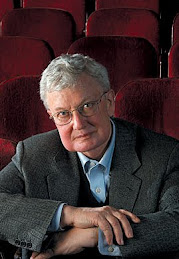
I had been eager to see Nine since the release of its trailer. Despite its harsh reviews, I still wanted to see the film. During the week, such an opportunity presented itself as I saw the film before its wide release. In fact, even after I saw the film, I couldn't understand its reviews. I had thoroughly enjoyed the film and found it to be both engaging and entertaining. I couldn't understand the critics and even called the film one of my favorites of the year... until I read Roger Ebert's review, who helped put things into perspective.

I'm not a fan of reading reviews, except when it comes to Roger Ebert, and even then, the decision to see a film is entirely my own. I was, however, in disbelief when I just read his review for Nine. The first two lines speak directly to me, as if he knows what my problem was. The following are excerpts from his review.

My problem may be that I know Fellini's 8½ too well. Your problem may be that you don't know it well enough.

I couldn't believe his words. I was all ears.

The story, recycled by Rob Marshall for Nine, involves aspects of Fellini's own life: his vagueness about screenplays and deadlines, his indifference to budgets, his womanizing, the guilt about sex instilled by his Catholic upbringing, his guilt about cheating on his wife and about bankrupting his producers. It was said that 8½ wasn't so much a confessional as an acting-out of the very problems he was having while making the film, including how to use a gigantic outdoor set he'd constructed for no clear purpose. It's a great film, some say his best. Nine, the musical "adapts" it, true enough, but doesn't feel it.

Nine is just plain adrift in its own lack of necessity. It is filled wall to wall with stars (Marion Cotillard as the wife figure, Penelope Cruz as the mistress, Judi Dench as the worrying assistant, Nicole Kidman as the muse, the sublime Sophia Loren as the mother). But that's what they are, stars, because the movie doesn't make them characters.

I can now better understand those reviews. I presume the problem lies within my own experience with cinema. I've seen once, and perhaps that was the problem. I didn't give it another viewing, despite its complexities, because I didn't feel like I was ready to go back and rewatch the film. I guess now is the time to do so.

I thought Nine was an engaging film. For once, a film was entertaining. I adored seeing the stars grace the screen, and I even sang along with the musical numbers. The problem, however, is that the film is recycling familiar material, and most importantly better, original material. I just have not been able to see why Fellini's film was so superior. I was not able to comprehend it as well as I should have, and although the film has not faded in my memory of the past year and a half, I feel obligated to go back and rewatch the film and understand why it's a better film and what it really consists of. Then, and only then, will I be able to see that any adaptation or retelling of the story will not live up to the original.

With that said, I felt like Nine didn't necessarily have to be compared to the original film. Roger Ebert states that the film "pays homage to a Broadway musical, and not Fellini at all." For that reason, I disconnected myself from Fellini's film and simply saw it on its own terms. I felt like Nine was an adaptation of a play which was inspired by Fellini's film, and not necessarily connected with any other significance. Perhaps I'm wrong. Perhaps I'll need a few more films and years under my belt. I haven't been watching Fellini films my entire life and haven't truly discovered his work. I think that may be the problem I was originally facing, and why the critics are all siding separate from my opinion.

It all comes down to a lack of experience, and this is how we grow.

Thursday, November 12, 2009

The Style of Steven Spielberg

In July 2009, all students who had been accepted to USC were required to come to the school for orientation. I had always distanced myself from the School of Cinematic Arts and had never gone inside, simply because I didn't think I deserved to do so until I had been officially accepted. I had the chance to explore parts of the building when the Critical Studies group separated to discuss our Fall 2009 classes. It was here, sitting in the Carson Television Center, that I discovered the upcoming course on Steven Spielberg. It was a film analysis course on the director's style and it had only been offered twice before, in 2002 and 2005. Our counselor told the group that Steven Spielberg himself visits the class for a Q&A. I was sold.

I didn't take the class to meet Steven Spielberg, that was an added bonus. I enrolled in the class to learn about his career. I have always viewed Steven Spielberg as a man who has influenced us all in some particular way. He has created magical worlds and we have embarked on journeys throughout his films, and I wanted to learn about all of this. It also helped that the class was being taught by one of the greatest film professors.

I stumbled across the syllabus for the course before school started. I skimmed through until I discovered what we were doing for one of the class meetings - "Q&A with Steven Spielberg" - and that's when it hit me. I was going to meet Steven Spielberg in just a couple of weeks. I went from dreaming about studying film in school to being accepted to what is arguably the best film school in the world, just days away from meeting one of the most legendary filmmakers of all time. Since then, I began wondering what I could ask Steven Spielberg. I came up with nothing. This evening would be forever memorable to everybody who dreamt about becoming a filmmaker.

The evening arrived on November 4, 2009. We walked into Norris Cinema, to our usual seats, but this time, we weren't going to learn about Steven Spielberg. Tonight, we were going to meet him, and have the opportunity to learn from him, firsthand. Over the loudspeakers, we could hear the beautiful music of E.T.: The Extra Terrestrial, which is probably the first piece of music that comes to my head when I think about this man. We waited a full hour, impatiently, until we heard our professor introduce Mr. Steven Spielberg.

I can't quite begin to describe how I felt at that moment, and I think it is safe to assume that everybody probably felt the same way. There was magic in the air, and as we stood up to applaud Steven Spielberg, we could feel something magical in our hearts as well. This wasn't just a film director, this was a man who shaped our childhoods, with films like E.T.: The Extra Terrestrial, Jurassic Park, Indiana Jones and a handful of others. He was responsible for starting the "blockbuster" with Jaws, and is single-handedly responsible for shaping the face of Hollywood as well.

I had the opportunity to ask Steven Spielberg my question. I stood up, reached for a microphone and told him how I felt, as best as I could in less than one minute. I told him that telling him that he has been a major influence on all our lives is an understatement. We didn't just grow up on his films, but his films became apart of our lives very early on. Every time we hear the music from his films or see E.T. and Elliott flying over the moon, these sounds and images were iconic to us. His films, ultimately, shaped our childhood and I thanked him for what he had given us. Surprisingly, my fellow classmates began applauding me, not because of my comment, but because it was true. Steven Spielberg affected our childhood, he gave us these wonderful memories and journeys, and it was an honor meeting him. It was obvious he felt touched by my words because he nodded and thanked me. I quickly remembered, however, that I forgot to introduce myself, and when I told him my name, he simply smiled and said, "Well, it's very nice to meet you this way."

An hour and half after he had entered, he had disappeared. We all sat down, speechless. The screening following could not have been a better pick, it was Schindler's List, arguably Steven Spielberg's best film and most memorable. Once the screening was over, the entire audience was silent. It was a truly wonderful evening and something I could not have imagined being apart of.