Wednesday, January 26, 2011

Daily Trojan

I am officially a published writer!

It's been my dream, for as long as I can remember, to have my writing published. I am officially a published writer, because I have signed on to write articles and reviews for the Daily Trojan. I never could have imagined writing for the Daily Trojan, which is one of the oldest traditions at the University of Southern California. The school newspaper dates back to its first issue on September 12, 1912, when it was first known as the Daily Southern Californian.

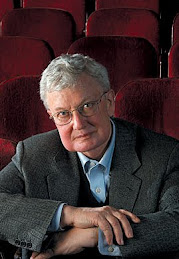
I am officially a contributing writer for the Lifestyle section of the Daily Trojan. I am in charge of writing articles and reviews for film, theatre, and music. I have been hard at work, but my first article for the newspaper has been published. The article is a review of Roger Ebert's program, Ebert Presents at the Movies. This specific article will only appear online, whereas my future writings may be in both print and online. The article is also on the front page of the Daily Trojan!

I would really love for all of you to read the article, Roger Ebert relaunches film review show, and leave a comment on the page.

Thursday, December 23, 2010

Black Swan

Darren Aronofsky does things his own way. In this day and age, while every other filmmaker has made the switch to digital cameras, the young auteur is stepping back in time and working with Super 16mm. Black Swan (2010) is a gritty film, and a film only a young and passionate filmmaker can helm.

Black Swan is cut from the same cloth as the rest of Darren Aronofsky’s films. Darren Aronofsky is no longer writing his films, but a continuous trend in thematics that prevails in the work of auteurs seems to be occurring in his films. the characters in his films seem to be overtaken by an obsession; patterns (Pi), addiction (Requiem for a Dream), eternal love (The Fountain), and perfection (The Wrestler and Black Swan). Pi (1998), Requiem for a Dream (2000), and The Fountain (2006) are dissimilar in their style, but are all concerned with the endless search for hope. This presents us with an unofficial trilogy in terms of this specific thematic.


There was a switch in technique after The Fountain for Darren Aronofsky, who stopped writing his films and focused solely on directing with The Wrestler (2008). The Wrestler was on the other end of the spectrum in comparison to The Fountain, as Darren Aronofsky went from visually beautiful to a film that was as rough as its main character. The Wrestler and Black Swan, however, are companion pieces as they both deal with characters who use their bodies to express themselves. The characters in both films deal with very physical performances (wrestling and dancing), and are also concerned with obsession and the transition into insanity in search for perfection. In both films, Darren Aronofsky steps into unfamiliar territories in terms of the look of his film, as the handheld and tracking camera allows us to become observers, much like the documentary filmmaking of cinéma vérité films.

Black Swan centers on the life of Nina Sayers (Natalie Portman), a young ballerina who fights her way to the top through perseverance and determination. In this psychological thriller, the elements of horror come into play as we explore the inner thoughts of our main character. In a surprise turn of events, we discover that Nina is offered the role of Swan Queen in Swan Lake. The role requires Nina to play two parts; White Swan and Black Swan. This requires her to switch from the naïve and innocent girl that she is to a much more sensual and daring femme fatale. The only person standing in Nina’s way is Lily (Mila Kunis), who slowly becomes threatening in her personal and professional life. In the same way that Raging Bull (1980) was not a film about boxing, Black Swan is not a film about ballet. Black Swan is a film about a ballerina, and her deterioration over the course of the film. I find it quite amazing that I identified with a ballerina of all people this year.

Black Swan is a clever thriller and provides us with a haunting atmosphere, as we move into a world full obsession and hallucination. In the beginning of the film, we begin understanding Nina’s ambitions and goals, and her search for perfection. Black Swan raises the question of whether perfection is a realistic and attainable goal, and when we pass the line and lose ourselves to insanity. Darren Aronofsky manages to skillfully blur the line between reality and fantasy. The style of the film and its constant use of handheld tracking shots in the film effectively place us in the mind of the main character, as we have a hard time distinguishing between reality and fantasy.


Matthew Libatique picks up where Maryse Alberti left off with The Wrestler. In fact, the final shot of both films mimic each other. The characters take a final leap; Randy jumps from the bars of the ring as Nina jumps off the stairs. This further presents us with the idea of both films acting as companion pieces. In The Wrestler, the handheld camera and frequent tracking shots placed us in the world of wrestling, as we felt like we were in the ring with the characters. In Black Swan, the cinematography is much more sophisticated, as we spend most of our time looking at the back of our main character’s head, following her in her house, at rehearsals, and everywhere in between. There are numerous abrupt cuts, as well as match cuts, which are stylistically beautiful and thematically effective.

The elements of paranoia are also represented through the use of mirrors, which serve as unreliable determinants of whether what is taking place is actual real. The mirror in Nina’s house resembles a broken mirror, full of reflective angles, projecting a sense of her schizophrenic personality. The use of these mirrors, in her home and workplace, also hints at the possibility of a doppelganger (Lily). In fact, the first time Nina and Lily meet are in a bathroom, as we view their conversation through a mirror. In the course of their conversation, the two characters blend together through their reflection in the mirror. This emphasizes the possibility that Lily is in Nina’s mind, and that their personalities will eventually combine in the film. The cinematography of the film also allows us to experience her paranoia, because our own minds continue to race as we attempt to distinguish reality from fantasy.


Clint Mansell, who has been Darren Aronofsky's leading composer since Pi, presents us with a haunting rendition and adaptation of Pyotr Ilyich Tchaikovsky's Swan Lake. The final act of the film is frightening, as the music and cinematography work together harmoniously. Darren Aronofsky turns the film from a physiological thriller into his very own operatic ballet, as we witness the metaphorical and physical transformation of our main character into the Black Swan. In the same way that Darren Aronofsky adopted macro photography to create the visual world of The Fountain, the young filmmaker cleverly and efficiently uses CGI to create this stunning and horrific transformation.

Black Swan is a haunting experience, and will terrify those who strive for perfection. Darren Aronofsky questions the desire for perfection, and the price that we ultimately pay for striving to reach perfection. The final moments of the film are harrowing, as the young and beautiful ballerina speaks her final line as she lays in a pool of blood, after her search for perfection. The final line of the film is "I was perfect" and emphasizes that she paid the ultimate price to reach her goal. In fact, at this point of the film, her story became mine, and I was feeling my own search for perfection come to life. I felt like she was speaking for me, as I put myself into the film and heard my own thoughts on the big screen.

Friday, December 17, 2010

The Fighter

I stood outside the theatre before the screening, reading a promotional poster for The Fighter (2010). There was some good word from the studio, attempting to hype up the film by comparing it to Rocky (1976) and Million Dollar Baby (2004). Their approach was that these two films were works of fiction and could naturally hype up the material, while the story in The Fighter is true and based on the life of Micky Ward. I smirked, wondering why they didn't mention Raging Bull (1980), and it's probably because Rocky and Million Dollar Baby both won the Oscar for Best Picture, and they were attempting to compare this film solely to other films which were Oscar worthy.

The Fighter tells a story that we have all heard before, whether that story is told through the character of a boxer or a family melodrama. Micky Ward (Mark Wahlberg) is an amateur boxer, trying to make a name for himself, in the shadows of Dicky (Christian Bale), his older half brother, who is a legend in their small town. Micky cleans streets for a living and ends up meeting Charlene (Amy Adams), a local bartender, right before a big match. Micky loses, comes back half depressed, and sulks in his failure. Micky rises to success after his brother, now a criminal and a junkie, is sent to prison. This all serves as inspiration for Micky who, with his girlfriend by his side, tries to rise up the ladder and become a champion.


The story is painfully predictable. I don't know Micky's story, but I know where he's ending up. That's not the problem with this film. I've seen everything this film throws at me before, in previous boxing films and other films in general. That's not the problem with this film. The problem with this film, plain and simple, is David O. Russell's direction. The film is very heavy-handed and doesn't find a stable ground to allow us to immerse ourselves into the story. The switch from film to video during the boxing fights doesn't do much, probably because it's not even used effectively. It's all much too aware of itself, rather than being subtle in its use. In addition, Russell's use of pop tunes is distracting, reminding us of some of the worst films I've seen. The film, from beginning to end, is filled with music that is meant to reflect the time period of the story. I don't feel like this works and instead becomes annoying as the film progresses.

The film, however, isn't all bad and it's saved with several strong performances. Christian Bale delivers his best performance, as he literally transforms into a crackhead. It's shocking, surprising, humorous, and heartbreaking. The film begins with Christian Bale and the film ends with Christian Bale. The film is nothing without Christian Bale. The mannerisms of his character, such as his off-the-cuff remarks, including a spontaneous comment to a passerby, in which he says, "What kind of dog is that? Is that a cocker spaniel?" adds to the depth of his character. I believe Christian Bale will finally win an Academy Award with this performance. In addition, the story with Micky and Dicky is obviously powerful and emotional. The ending is quite touching and their growth throughout the film works, but it only touches our hearts because of the bond these two have established. I can't say the direction of the film ever made me grow closer with these characters. If anything, the direction of the film distracting me from sympathizing with the characters.


Amy Adams is the other star of this film, as she plays against type as a rather sleazy bartender. If Christian Bale is the one who provides us with the in-your-face type of performance, it's Amy Adams who gives us the much more subtle and emotionally warm performance. There are moments of great authenticity in cinema, which allows the audience to emotionally connect with the characters, and Amy Adams delivers more than once in this film. There is a scene when Micky has hit rock bottom after the police break his hand, and as he sits in his house, Charlene appears at his door. There is no dialogue in the scene, and it plays out quite wonderfully. This is terrific storytelling and acting, allowing us to become emotionally involved with the characters. There is another very effective scene between Dicky and Charlene, which allows the characters to breathe and perform. This is what I hoped for from David O. Russell in this film, and he only delivered sparingly.

I found myself entertained, but distanced for much of the film. It's impossible for me not to compare this film with Raging Bull, a much better story on the same subject matter; two brothers who grow up in the boxing ring. Raging Bull is much more effective in every form; writing, direction, cinematography. The use of the camera in The Fighter doesn't work. The film is often all over the place and distracts us from what is most important; its characters. I think, in the end, the problem I have is with the direction of the film. I can't help but wonder what this film would be in the hands of a much more competent and emotional filmmaker, such as Darren Aronofsky, who was originally going to direct. In the end, I don't think it matters. I've seen and heard this story before, and besides some really powerful performances and several touching moments, this film is rather forgettable.

The Fighter is scheduled for release on December 17, 2010.

Wednesday, December 15, 2010

Creating Poetic Cinema

I remember when Mary and I came to the University of Southern California to drop off my application. I had never been to the school before, and I felt like a child while walking around the massive campus. I couldn't believe such a school existed, and when I finally came across the building I was looking for, the Johnny Carson Sound Stage, I was mesmerized. I dropped off my application, walked out of the building, and began walking back to my car. In the meantime, we passed by the recently added buildings for the School of Cinematic Arts, in their new location. I couldn't believe my eyes. These buildings were all dedicated to the study of cinema? I knew I had to see what was inside of them and walk in their hallways. Mary finally asked me if I wanted to go in. I shook my head and said, "I'll go inside when I'm accepted to this school." I felt like that day would come, and when it eventually did, that's when Mary and I finally walked through the gates of the School of Cinematic Arts.

I didn't go back to USC until after I was officially accepted. Mary and I went to a screening of Grace, as I tried to accept the fact that I would start school there in a matter of months. I sat inside Norris Cinema watching Grace, trying to imagine having a class in such a theatre. These dreams became reality within a few months and I never for once took advantage of the journey. I still walk from the parking lot at school to these buildings, never forgetting all my hard work and dedication. I'm still mesmerized by these buildings and the numerous film posters that fill our hallways. I'm still fascinated and wide-eyed at all the films I see in my classes, and I still experience a rush when I'm required to make my own films. I was a kid with a dream and I worked as hard as I could to have those dreams realized.

I decided to enroll in a production course, open to both undergraduates and graduates, known as Creating Poetic Cinema, offered by Pablo Frasconi. In this class, we would try to understand what poetic cinema is, and try to apply it in our own films. I had the opportunity to work with some very talented students and see some terrific films in the class. I also had the opportunity to create four of my own films, including a short film that was shot entirely on 16mm. I was both excited and anxious to finally work with film, and the experience was a highlight in my life. On December 9, 2010, our professor chose several films from our class and presented them on campus. I had two of my films selected, including Carnaval, which was shot on 16mm and The Armenian and the Armenian.

I had several members of my family in attendance, as we watched the films at the Ray Stark Theatre in the George Lucas Building. I went from a young child who was fascinated by telling stories to attending USC School of Cinematic Arts and having my films play on the big screen. I love creating films and sharing them with people I know and love as well as people I have never met or seen. I enjoyed every minute of the evening and received some very positive remarks in regards to my films. I feel inspired to create more films, to share them with more people, and to continue living my dreams.

It's funny how life works, because everything and anything is possible in this world. I sat in the Ray Stark Theatre watching two of my films with my family, and this was everything I had hoped for in life. I finally made it inside USC School of Cinematic Arts, and now, I'm working hard to get back outside, in the real world.

Thursday, October 21, 2010

Cinema 102, Professor Karaoghlanian

It's just as I had imagined! I need to offer another course because the first course is closed! In this course, I will be teaching an introduction to cinema, in which we will be discussing the basics of cinema, as well as the foundations of the medium and the films that exemplify their respective movements. It's a closer look at the techniques, aesthetics and social implications of cinema. It's also a chance to better understand the different elements of cinema, and like all my courses, it's a chance to discover films that you have never seen!


Week One – Opening Film

Screening: Singin’ in the Rain (1952)

I believe in magic... and for the first film of this course, I would like to allow my students to experience the magic of cinema. Singin' in the Rain is one of those films that will leave an impression and become an instant favorite. It's the perfect film to lift up your lackluster life! Singin' in the Rain stars Gene Kelly, Donald O'Connor and Debbie Reynolds. It's an unforgettable film that will leave you laughing and crying and singin', and for that reason, we will screen it as the opening film for the course.

Week Two – Literary Design

Screening: The Sweet Hereafter (1997)

It's time to jump into the course, and our first order of business is studying the literary design of films. The Sweet Hereafter was adapted from Russell Banks' novel of the same title. Atom Egoyan makes a faithful adaptation here, which received a nomination for an Academy Award. It's a devastating film, which allows us to understand the way in which a novel can be transcribed onto the screen.

Week Three – Performance

Screening: On the Waterfront (1954)

Who's your favorite actor? If Marlon Brando didn't immediately come to mind, then it's probably because you have never been properly introduced to him. Marlon Brando in On the Waterfront is a role that arguably redefined acting for generations to come. The actor is often praised for his performance but audiences don't seem to understand the true commitments of actors, and that's their star persona is one of the things we will discuss.

Week Four – Visual Design

Screening: Raging Bull (1980)

I'm having some fun here because I had to write my first paper as a film scholar on this film and on this element of film production. Raging Bull is perfect in all aspects of cinema, from its performances to sound design. It's visual design, however, is so superb, I can spend hours discussing and analyzing certain scenes. Martin Scorsese creates a jungle-like atmosphere within the boxing ring and puts the audience right in the middle of it. It's exciting, devastating, and shows the deterioration of a "raging bull."

Week Five – Composition

Screening: Lawrence of Arabia (1962)

In Entourage, Billy Walsh was starting work on a film that was set to make Lawrence of Arabia look like it was shot on a sandbox. I'm not surprised that his film never came to fruition, because such a film is not possible. In terms of space and landscape, David Lean paints a sturnning portrait with this film. There are certain shots that will stay in your mind, forever.


Week Six – Temporal Design

Screening: Memento (2000)

Who says you have to follow the rules of filmmaking? Christopher Nolan certainly didn't when he was making Memento. In fact, he chose to tell the entire story backwards. Yes, he begins by telling us the ending and moves in reverse. It's the job of an editor to be invisible, and if their work on the film is top notch, audiences will never know about their existence. That's a problem because editors are storytellers on their own, and that's our focus of discussion.

Week Seven – Sound Design

Screening: Apocalypse Now (1979)

This is a terrific topic to discuss because most audiences often ignore sound design when it comes to films. It's often overlooked because they don't understand what it really is. Walter Murch paved the way for sound design with Apocalypse Now, considering the term was born after his contribution on this film.

Week Eight – Documentary

Screening: Waltz with Bashir (2008)

I'm sure a ton of people who don't regular watch many films have seen documentaries, but the problem is they have probably seen made-for-television documentaries. Waltz with Bashir is an amazing effort by Ari Folman because it's a foreign language animated documentary. It's terrific in terms of all three, but it's an engaging and thought provoking documentary.

Week Nine – Animation

Screening: Snow White and the Seven Dwarfs (1937)

Snow White and the Seven Dwarfs is a well-known film, but I'm certain many people didn't know it was made over seventy years ago! In fact, it was the first animated feature film - in color, in the United States - and it was produced by Walt Disney. The role of animation in films has changed over the past few decades, so we will be looking at the significance of such films.

Week Ten – Modes of Representation: Realism & Formalism

Screening: Ladri di biciclette (1948) and Sayat Nova (1968)

It's time to jump ship and look at two very different types of films. Ladri di biciclette depicts the reality of Postwar Italy. It's heartbreaking, cruel, and you could swear it's all real. In fact, it almost is, because many of the cast and crew are amateurs. In Sayat Nova, however, you will be blown away by the formalist approach. Sergei Parajanov, the filmmaker, was a poetic artist and tells a story completely through a visual approach, rather than a narrative approach. I assure you, it's nothing like you've ever seen in your life. Sofiko Chiaureli (a female!) plays an astonishing six characters in the film, including the title character of Sayat Nova.


Week Eleven – Classical Hollywood (1929-1945)

Screening: Gone with the Wind (1939)

It's time to define our times, and to be introduced to Classical Hollywood. This is the Golden Age of Hollywood, all of which seems like a dream to us now. Clark Gable, Ava Gardner, Rita Hayworth, Katherine Hepburn, Grace Kelly, Vivien Leigh... the list goes on! In our first look at a time period of filmmaking, we will discuss the history of the Classical Hollywood period.

Week Twelve – Postclassical Hollywood (1946-1962)

Screening: The Apartment (1960)

Who can resist falling in love with Shirley MacLaine, or admiring the down-and-out Jack Lemmon? This film defines this period of Hollywood because it's so rich in terms of romance, comedy, and characters. It's time to see how films began changing after the war, in terms of censorship and content.

Week Thirteen – Modern Hollywood (1963-1976)

Screening: The Graduate (1967)

The Graduate defines this period of time in Hollywood where things were changing, including the circumstances in which we made our films. This is a time in which filmmaking was changing, as the studio system began falling apart. The Graduate is one of the films in which this change is present... and making films has never been the same since, for better or for worse.

Week Fourteen – Postmodern Hollywood (1977-Present)

Screening: Who Framed Roger Rabbit (1988)

This is the time period in which we live in today, driven by franchises and technology. Who Framed Roger Rabbit is a terrific film, it's hauntingly beautiful, because of its ability to incorporate animation with live action. This is a good example of a film using technology to integrate it with its storytelling. This is the time period in which we make films in today, a time in which our fascination inspires us to work with animation, performance capture, and 3D.

Week Fifteen – Closing Film

Screening: Citizen Kane (1941)

I suppose we can save the best for last, because Citizen Kane is one of the defining films in the history of cinema. This film changed the business, not just because of it's approach in telling a story, but its performance and cinematography as well. It's time to wrap up the class, and what better way than to leave one what is arguably one of the best films of all time.

I hope you'll be back for my future courses, including an upcoming course that covers international cinema! If there are specific films that you have seen and would have something to say, please feel free to share. If there's a specific film you would just suggest as a replacement for one of the films I have chosen, I'd love to hear your thoughts.

Thursday, October 14, 2010

Look, Ma! I'm on television!

I'm usually behind the camera on my projects, but this is a chance for me to be in front of the camera! I'm going to be on Platforum, a program on Trojan Vision, which is a student television station at the University of Southern California. I was asked to join a panel of students who will be discussing, debating, and conversing about the films of this season, some of which will be in consideration for awards season in a couple of months.


I love talking about films, so I would never turn down such an opportunity. If you live in the Los Angeles area, you can watch it live on Channel 36 at 5:30pm. If you don't live near campus, you can stream it online. Trojan Vision broadcasts to more than 29,000 students and 18,000 university employees, and over 1.8 million homes in the Los Angeles area.

I hope everybody will be watching, as we discuss many films that are already gaining momentum for the Academy Awards. So, this is your chance to watch and see what films you should check out that are currently in theaters, and what films you should be prepared for in the coming months!

If you'd like to watch the program, click here to watch the entire episode online!

Wednesday, September 15, 2010

Yerek Yereko (Three Evenings)

Yerek Yereko (Three Evenings) is an independent film from Arshak Amirbekyan, and it held its World Premiere in Los Angeles on June 9, 2010. Now, it’s scheduled to screen at the Arpa International Film Festival at the Egyptian Theatre, and I wonder if my fellow brothers and sisters will show up this time, because the theater was awfully empty several months ago.

Yerek Yereko is not your typical feature film. I was surprised to find out its running time was only 64 minutes – that’s either excellent storytelling or an extremely repetitive short film. In addition, the film was produced with a consumer camera (HDV) with a budget of $2,500. If you’re still not convinced, it is also a period piece set in the 1960s.


In the film, a lonely man (Georgi Amirago) spends his days writing his doctoral thesis, and spends his days behind his typewriter in the midst of parties and celebrations that often occur in the apartment below his. On a particular evening, he sees a young woman (Kristina Zaminyan) standing outside his window, and discovers that she has been following her husband, who seems to be having an affair with a woman from his building. In their second meeting, the man finds the young woman waiting outside once again; this time, in the rain. They have a brief conversation, until she agrees to come inside for a cup of tea. It is there we discover that he is studying to become a scientist, and that she is married with three children, uncertain of where her life is headed. In her fragile position, she confides in him and tells him how she really feels, as she reveals her vulnerabilities and fears about life and marriage. Suddenly, she decides to leave, despite that it is still raining – it is only right to do so.

I realized by this point of the film that these characters had not introduced themselves to each other, or to the audience, for that matter. In a sense, this added a layer of a dreamlike quality between them and contributed to the atmosphere of the film. On the following day, the young woman decides to drop in unexpectedly. It’s a change of pace for the story because it is the first time she has taken the initiative. They drink beer, eat sandwiches, and laugh – allowing their friendship to form, as they grow closer. They even begin dancing – at first, it’s upbeat and fun to see them break free, and later, it's a slow dance. Their evening shifts into something much more intimate, as their relationship begins to evolve. This doesn't establish into a feeling of romance, but rather companionship. She's there for him, a lonely fool, and he's there for her, a lady in distress.


I don't want to go any further, but this is not a film of expectations. Instead, it's about finding a friend and establishing a compassionate relationship. It's an intimate film that deals with companionship, rather than sexual desires. In the end, there is a feeling of lost love, even though that love is never established in the conventional sense.

Yerek Yereko was adapted from a short story that the filmmaker’s father had originally written. It’s quiet, atmospheric, and gives way to the emotions of the leads, who never let their vulnerabilities steer them away. Yerek Yereko is a rare film that provides us with a sense of our culture. It is a film that could have been produced decades ago, when Italian neorealism films were presenting us with a look at life after the war. In a similar sense, Mr. Amirbekyan presents us with a film that deals with realism. It’s a beautiful film that speaks to our hearts and allows us a look at a hopeless love story.


Yerek Yereko has its share of flaws, from its sound design to its screen direction. In a sense, I was able to look past all of this - and I hope others will too – and focus on the intentions of the filmmaker, the overall story that he has presented for us. I was drawn to the screen and fell in love with the characters in the film. I felt proud, as I listened to the actors speak Armenian, and later read the credits in my mother tongue. I only wish there were more of us in attendance at the screening that evening, but perhaps, they will show up another evening.

Yerek Yereko is scheduled to screen on September 18 at the Napa Sonoma Wine Country Film Festival and on September 25 at the Arpa International Film Festival. I am currently in talks with the filmmaker to help bring the film to more screens in Los Angeles for the Armenian community.